A whole bed
Water a whole bed evenly
How to spread water evenly across a whole bed — with one sensor in the middle and a drip-hose ring.
1Sensor in the middle
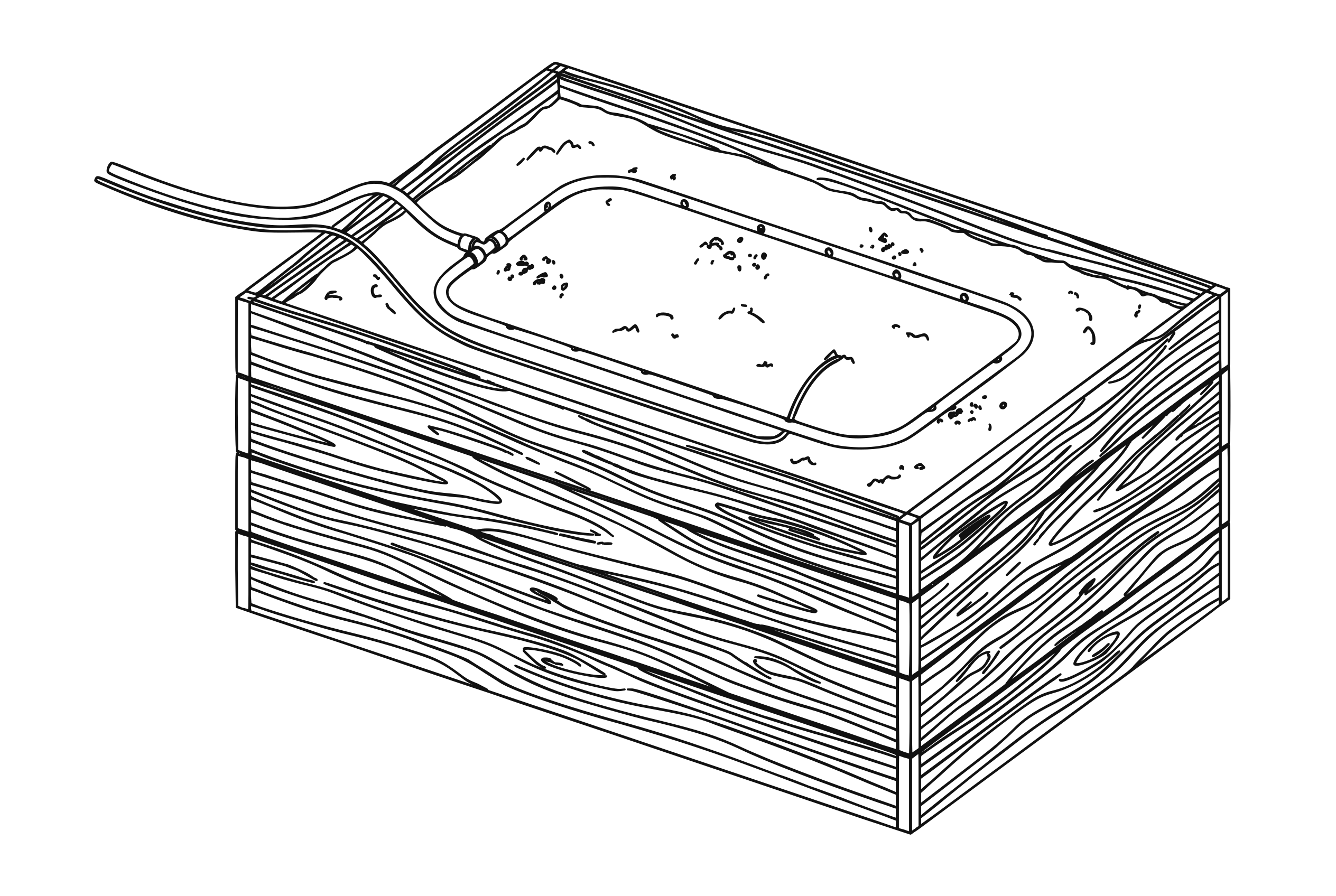
Sensor centered between the drip points Put the sensor as centrally as possible in the bed — even for a long bed. That is where the reading is most representative for the whole area.
2Choose the insertion depth
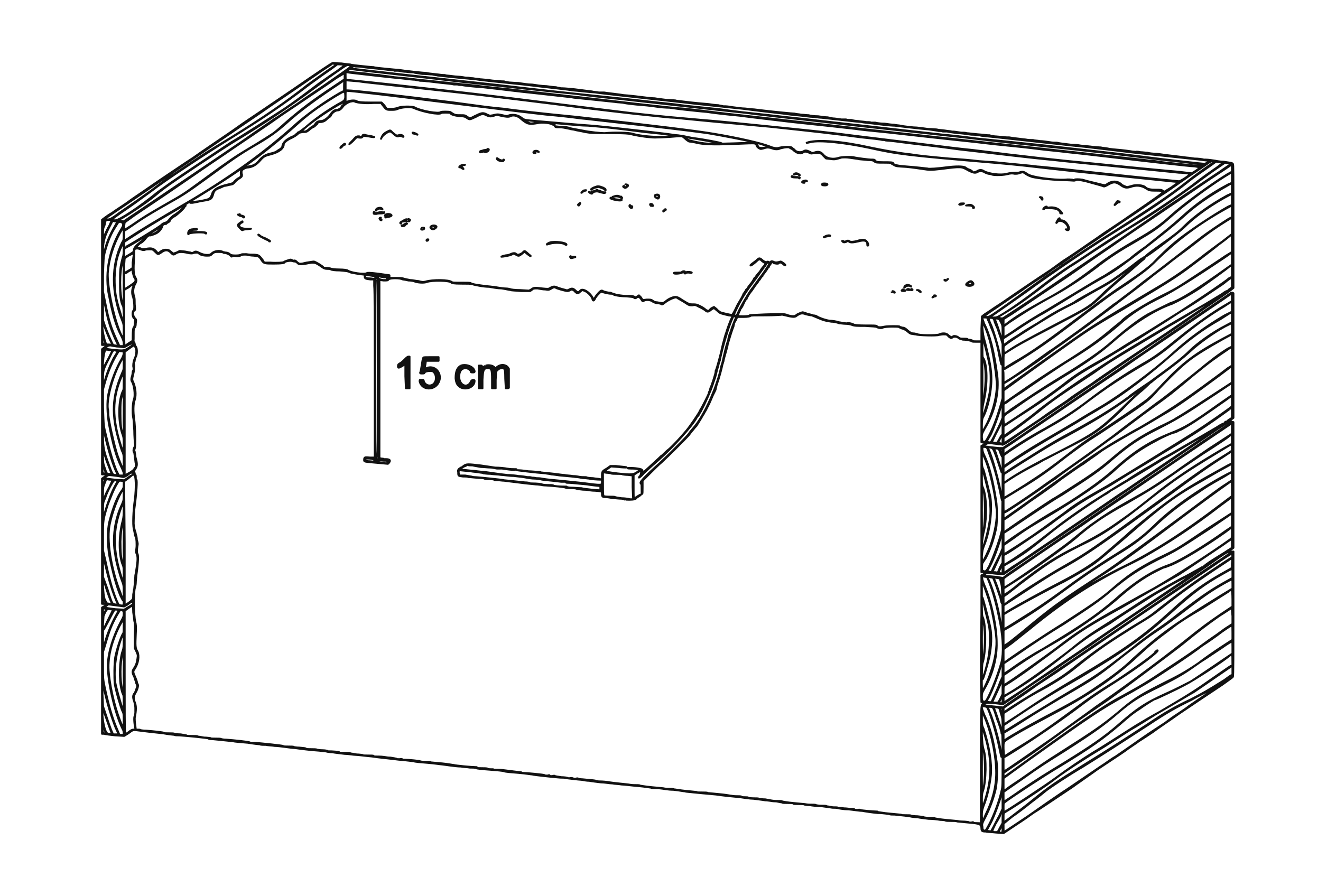
Insertion depth depending on bed size and crop The sensor is 12 cm long and measures across that whole length. For most beds it is enough to push it in vertically all the way — it then covers the top 12 cm, where most of the roots are.
If it should measure deeper — for deep-rooting plants, or when the surface dries out quickly while it is still moist below — dig a pit down to the depth you want and lay the sensor in it HORIZONTALLY, then cover it with soil again and press it down. Horizontally, because that way the entire sensing area sits in the same soil layer and measures exactly its moisture.
The sensor is fully waterproof (IP68) and may stay in the soil permanently.
WHAT THE TOP 12 CM COVER
- Shallow rooters (down to ~20 cm): onion, white radish, radish, potato, lettuce — the sensor sees practically the whole root zone.
- Medium-deep rooters (40–60 cm): kohlrabi, broccoli, leek, carrot, bean, pea, strawberry — it sees the upper half. That is the layer where the drip water arrives and which dries out first, so exactly the right variable to control on.
- Deep rooters (from 80 cm): parsnip, salsify, asparagus, beets, cauliflower — it only sees the top layer. These plants draw reserves from deeper down; the reading may well look drier here without the plant being in trouble. Set the target rather low.
Tip
This is not required — vertically all the way in is the normal case and perfectly sufficient for most beds. In both cases all that matters is that the soil sits snugly all around it.
3Lay the drip hose as a ring
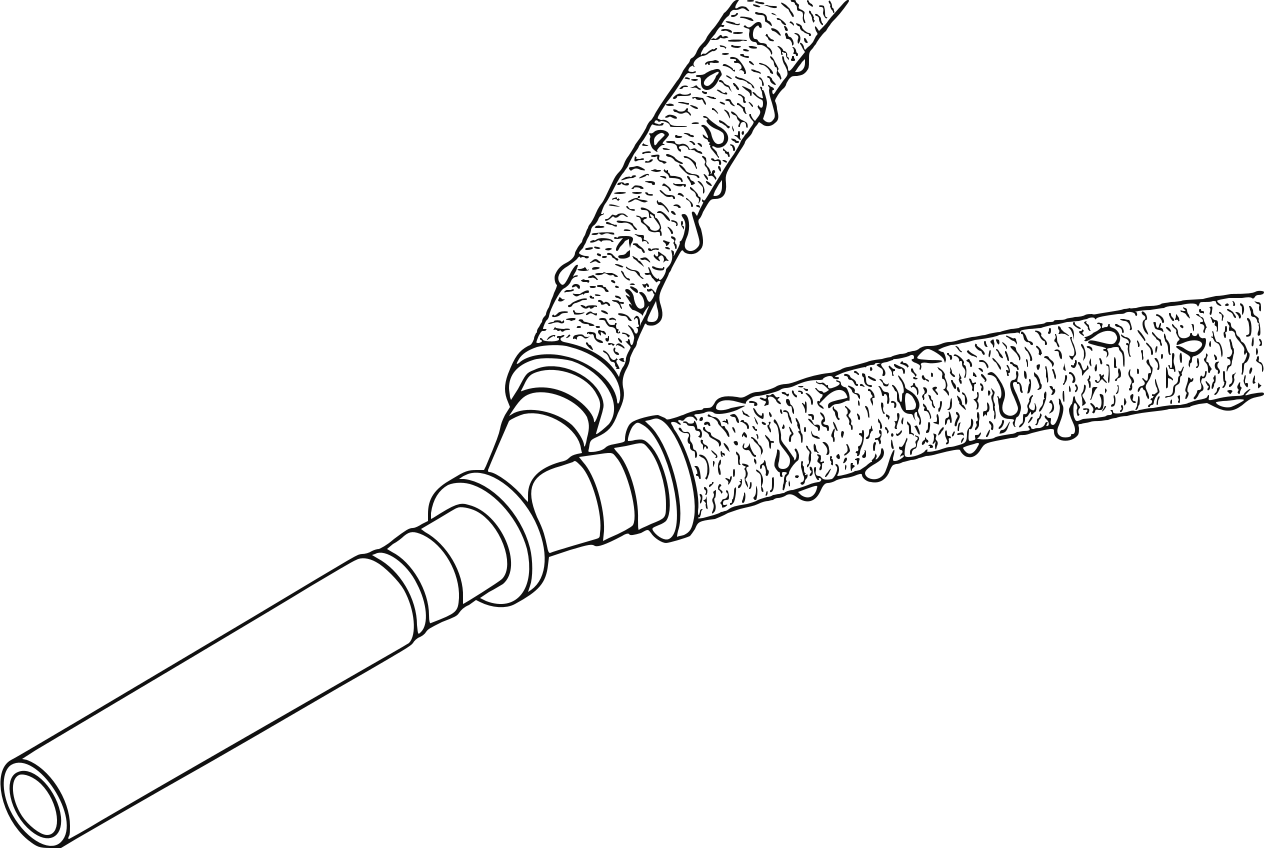
Y-splitter divides the supply line into two drip hoses Lay the drip hose like a ring around the bed area, keeping a similar distance to the edge everywhere. That way the whole bed gets evenly moist — not just one spot.
Caution
Use at least 60 cm of drip hose per zone, better 1 m. A shorter piece makes the pump build up too much pressure: it can start leaking and no longer detects an empty tank. And the hose never lies lower than the water level in the tank.
4Distance to the sensor: ~20 cm
Keep roughly 15–20 cm between the hose ring and the sensor (for elongated beds measured across the narrow direction).
5Choose the "Garden bed" preset
Apply the preset "Garden bed" to the zone — it brings higher watering amounts and a fitting daily limit. In the device setup wizard simply pick the zone type "Bed".
Done! Every bed is different — soil, size and planting vary. During the first days check that the soil gets evenly moist everywhere and adjust amount and hose distance based on your experience.